Key takeaways
- A property twin is a measurable 3D model linked to plans, finishes, services and, once built, live data.
- It supports off-the-plan sales, leasing, handover, facility management and remote checks.
- Unlike a virtual tour, it can be built before construction and stays useful after settlement.
- Marketing twins must be accurate under the Australian Consumer Law; label anything indicative.
What is a digital twin in real estate?
In real estate, a digital twin is an accurate, interactive 3D model of a building or property, linked to information about it: floor plans, finishes, building services, maintenance records and, once it's built, live data from sensors and cameras. People can explore it freely on a screen, in a browser or in VR, measure it, and see what's happening in the real building.
That last part is what separates a twin from the 3D renders and virtual tours the industry already uses. If you want the general background first, read what is a digital twin.
Virtual tour, render or digital twin?
| Virtual tour | 3D render | Digital twin | |
|---|---|---|---|
| Built from | 360-degree photos | Design model | Survey, BIM or design model |
| Move freely | Jump between photo points | Fixed images or a set animation | Yes |
| Before construction | No | Yes | Yes |
| Measurable | Limited | No | Yes |
| Live data | No | No | Yes, once built |
| Useful after sale | Rarely | Rarely | Yes, for facility management |
Uses across a property's life
Off-the-plan sales
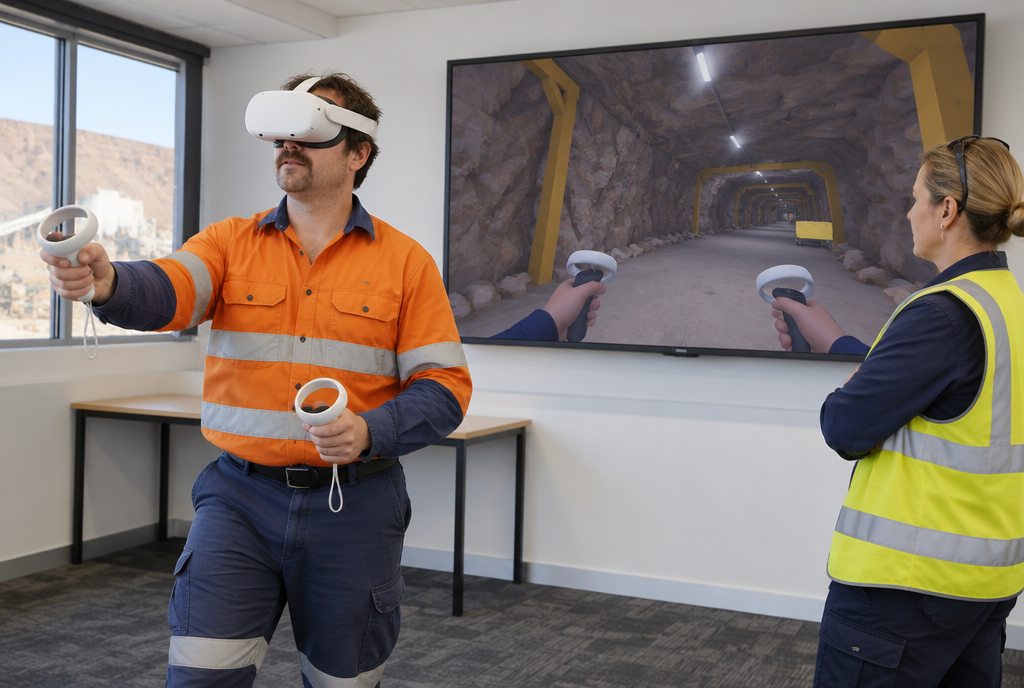
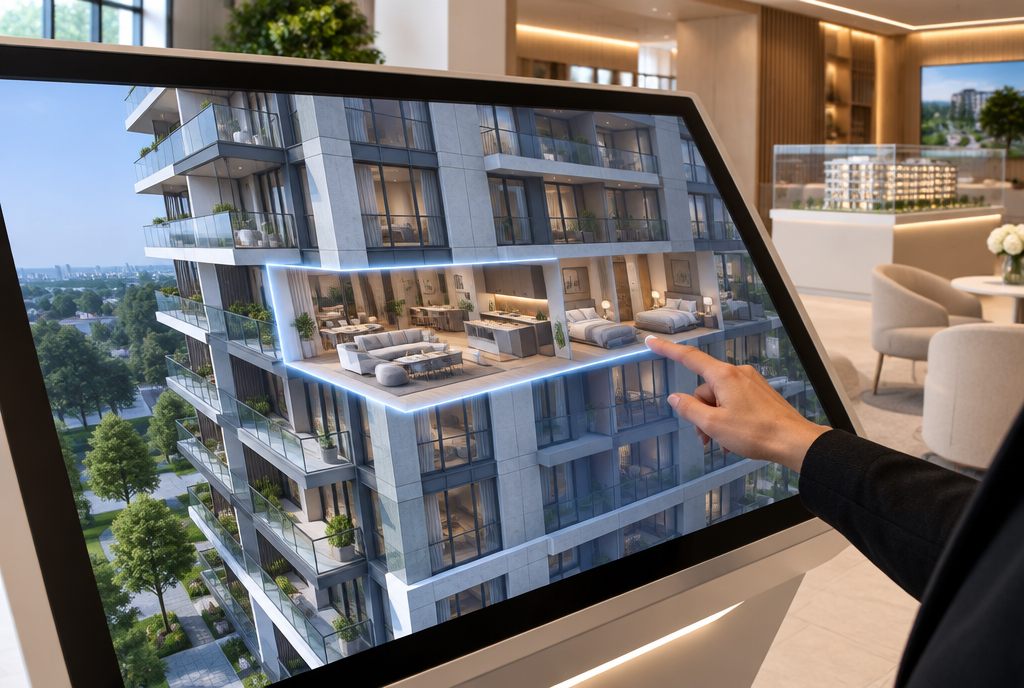
Buyers walk the apartment they're considering, check the view from their floor, compare finishes and understand the size of a room in a way floor plans never quite convey. Interstate and overseas buyers can do it from home; display suites can do it on a touchscreen or in VR.
Leasing
Prospective tenants test-fit their furniture or workstations, check sightlines and natural light, and shortlist before they inspect.
Handover
Instead of boxes of manuals, the owner receives a model with every asset located and documented: where the valves are, what was installed, when it's due for service.
Facility management
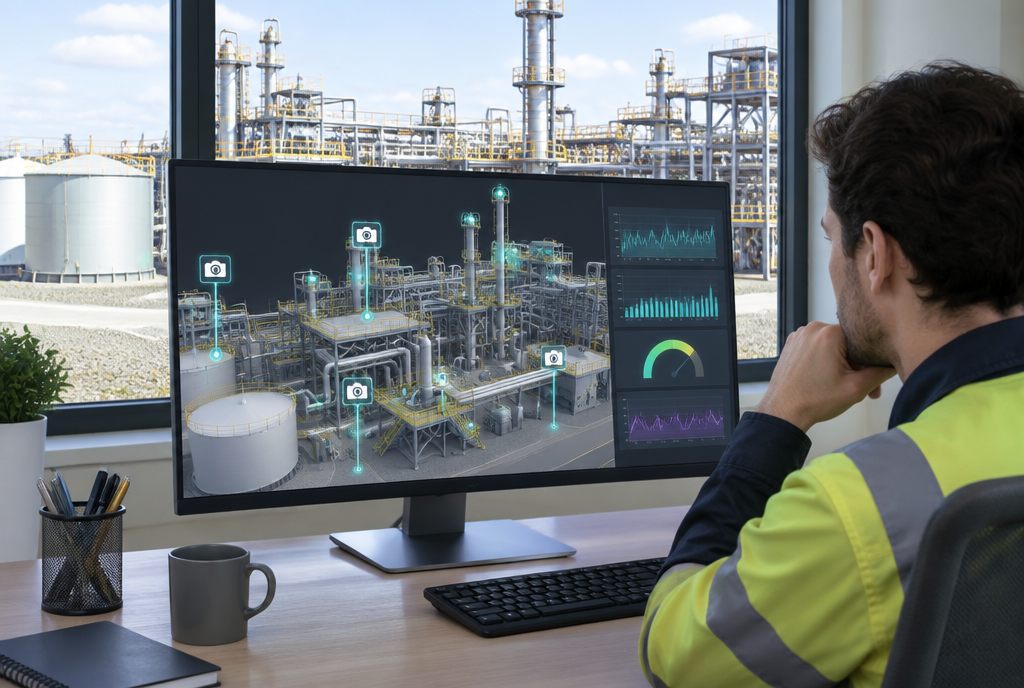
Building managers see services, alarms and work orders on the model. A leak sensor or a failed fan shows up where it is, with its history.
Remote checks and inspections
Vacant properties, holiday homes, rural holdings and portfolios spread across a state can be checked with cameras and sensors instead of a drive. For more on this, see remote site monitoring.
Who benefits
- Developers: sell earlier and to a wider market, and test design options before building.
- Agents: give buyers a reason to engage longer and inspect with intent.
- Owners and investors: understand the asset without travelling to it.
- Facility managers: find assets, plan maintenance and respond faster.
- Strata and body corporate managers: show owners exactly where common-property work is happening.
What goes into a property twin
- The geometry: from architectural drawings and BIM before construction, or from laser scanning and photogrammetry for existing buildings.
- Finishes and furniture, accurate to the specification.
- Context: the street, the neighbouring buildings and the real view from each floor.
- Information layers: areas, specifications, documents and asset registers.
- For built properties, live data: energy, temperature, water, access and cameras where appropriate.
Keep it accurate
If a twin is used to market a property, it must not mislead. Under the Australian Consumer Law, representations about size, views, finishes and inclusions need to be accurate, and differences between the model and what will be delivered should be clear. Build the twin from current drawings, update it when the design changes, and label anything indicative.
How a property twin is built
- Agree the purpose: sales, leasing, facility management or all three. It sets the detail and the platforms.
- Gather the source data: drawings and BIM, or a scan of the existing building.
- Model and texture to the level of detail the purpose needs.
- Publish to the web, touchscreens or VR headsets.
- Connect sensors and building systems once the property is operating.
Voxelane builds digital twins for real estate and property on the same engine we use for training and site monitoring, so a twin built for sales can keep working long after settlement.