Key takeaways
- High risk work licences cover cranes and hoists, forklifts, boom-type EWPs, scaffolding, dogging, rigging and pressure equipment.
- In South Australia you must be over 18, pass an RTO assessment, and apply to SafeWork SA within 60 days of the notice of assessment.
- Licences last five years. Excavators, loaders and dozers are not high risk work licence classes, but operators still need to be competent.
- Simulators don't replace the licence assessment; they prepare for it and cover the emergencies that can't be practised for real.
What is a high risk work licence?
A high risk work licence (HRWL) is a licence issued by a state or territory work health and safety regulator that a person must hold before doing certain types of work: operating most cranes and hoists, forklifts, boom-type elevating work platforms, boilers and turbines, and doing scaffolding, dogging and rigging work. The classes are set out in Schedule 3 of the model Work Health and Safety Regulations and are broadly the same across Australia.
In South Australia, licences are issued by SafeWork SA. In other states and territories the regulator is the equivalent body, such as SafeWork NSW or WorkSafe Victoria.
Every high risk work licence class
The table below lists each class by code, grouped the way regulators group them. Always check the current list with your regulator before booking training, as scope notes can change.
Scaffolding
| Code | Class | Notes |
|---|---|---|
| SB | Basic scaffolding | No prerequisite |
| SI | Intermediate scaffolding | Requires SB. Cantilevered and spur scaffolds, tube and coupler, mast climbing platforms |
| SA | Advanced scaffolding | Requires SI. Hung and suspended scaffolds, cantilevered hoists |
Dogging and rigging
| Code | Class | Notes |
|---|---|---|
| DG | Dogging | No prerequisite |
| RB | Basic rigging | Requires DG |
| RI | Intermediate rigging | Requires RB |
| RA | Advanced rigging | Requires RI |
Cranes and hoists
| Code | Class | Notes |
|---|---|---|
| CT | Tower crane | Including horizontal and luffing jib types |
| CS | Self-erecting tower crane | Erection and dismantling are part of its function |
| CD | Derrick crane | |
| CP | Portal boom crane | |
| CB | Bridge and gantry crane | Cab-controlled, or remote-controlled with more than three powered operations |
| CV | Vehicle loading crane | 10 metre tonnes and above |
| CN | Non-slewing mobile crane | Greater than 3 tonnes capacity |
| C2 | Slewing mobile crane | Up to 20 tonnes |
| C6 | Slewing mobile crane | Up to 60 tonnes |
| C1 | Slewing mobile crane | Up to 100 tonnes |
| C0 | Slewing mobile crane | Over 100 tonnes |
| HP | Personnel and materials hoist | |
| HM | Materials hoist | |
| PB | Concrete placing boom | Vehicle-mounted, two or more boom stages |
| RS | Reach stacker | Greater than 3 tonnes capacity |
For slewing mobile cranes, a higher class generally covers the smaller cranes below it, so a C6 holder can operate the cranes a C2 covers.
Forklifts and elevating work platforms
| Code | Class | Notes |
|---|---|---|
| LF | Forklift truck | |
| LO | Order-picking forklift truck | Operator controls on the load carriage, which rises with the operator |
| WP | Boom-type elevating work platform | Boom length 11 metres or more |
Pressure equipment
| Code | Class | Notes |
|---|---|---|
| BS | Standard boiler operation | |
| BA | Advanced boiler operation | Requires BS |
| TO | Turbine operation | 500 kW or more, plus other criteria |
| ES | Reciprocating steam engine operation | Piston diameter over 250 mm |
What doesn't need a high risk work licence?
Earthmoving machinery such as excavators, front-end loaders, skid steers, backhoes and dozers is not high risk work under the national scheme. The old "ticket" classes for those machines no longer exist. That doesn't mean anyone can operate them: employers must still make sure operators are trained and competent, usually through nationally recognised units of competency and a verification of competency (VOC) on site.
How to get a high risk work licence in South Australia
- Be over 18 and live in South Australia.
- Train and be assessed through a registered training organisation (RTO) that delivers the class you need.
- Get your notice of satisfactory assessment from the RTO once you pass.
- Apply within 60 days of the notice being issued, at a Service SA centre or an Australia Post Photopoint, with 100 points of ID, a photo and the fee. Notices aren't accepted after 60 days; you'd need to be reassessed.
- Renew every five years. A licence is valid for five years. If you don't renew within 12 months of expiry, you'll need to retrain.
A licence issued in one state or territory is generally recognised by the others for doing the work. If you move interstate permanently, check with the regulator where you now live.
Licence, VOC and site familiarisation: three different things
- The licence says a person has been assessed as competent in a class of work.
- A verification of competency (VOC) is an employer's check that a licensed person can safely do the work on their equipment, today.
- Familiarisation covers the specific machine, attachments, site layout, traffic rules and emergency procedures.
Many incidents involve licensed, experienced operators on unfamiliar machines or sites. The licence is the floor, not the finish line.
Where VR and simulators fit
Simulators don't replace the licence assessment. That assessment is done by an accredited assessor, on real equipment where the rules require it. What simulators do well is everything around it:
- Before the course: new operators learn the controls and the basics without tying up a real crane or forklift.
- Between real hours: trainees rehearse the lifts and situations they'll be assessed on.
- Emergencies: wind gusts, outrigger sinking, load swinging over people, a pedestrian stepping out. These can't be staged safely for real.
- VOCs and refreshers: a consistent, scored scenario that's the same for every operator, every time.
- Familiarisation: a model of your site and your machine, so a new operator meets the blind spots before the shift.
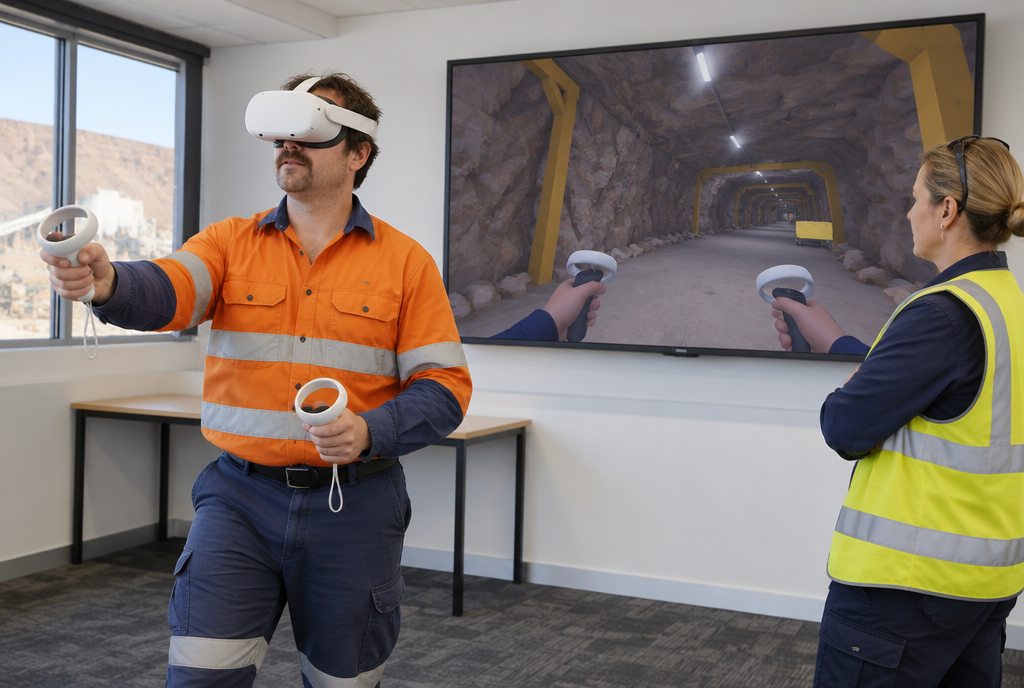
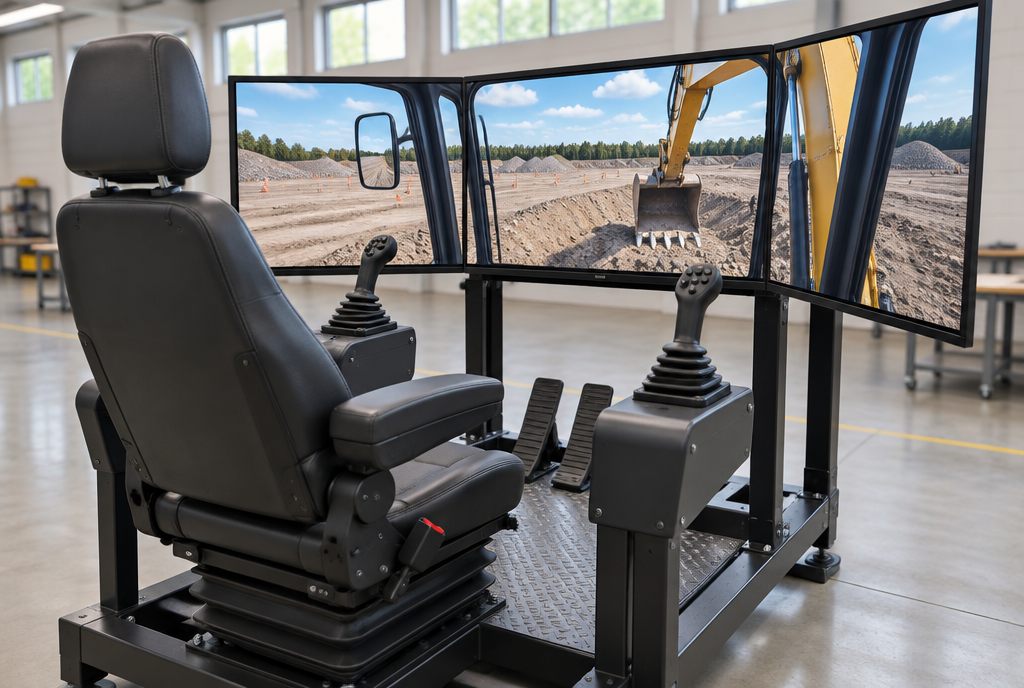
We build crane, forklift and elevating work platform training this way, on simulators with real controls and in VR, mapped to the competencies your assessors use.
This guide is general information, not legal advice. Licence classes, fees and processes are set by each regulator; confirm current requirements with SafeWork SA or the regulator in your state or territory.