Key takeaways
- Costs range from a web-based 3D scenario at the low end to a replica cab on a motion platform at the high end.
- The biggest drivers are the number of scenarios, environment realism, machine physics and hardware.
- Budget for support, updates, instructor time and space, not just the first build.
- A training needs analysis and a small pilot give you an accurate quote and evidence before you commit.
Why there's no single price
Asking what a VR training simulator costs is like asking what a building costs. A browser-based induction and a replica crane cab on a motion platform are both "simulators", and they sit at opposite ends of the range. Any vendor quoting a number before understanding the task, the site and the hardware is guessing.
What you can do is understand what drives the cost, so you can scope sensibly and compare quotes fairly.
Relative cost by type of build
From least to most expensive, for a typical scope:
| Type | Relative cost | What drives it |
|---|---|---|
| Desktop or web 3D scenario | $ | 3D models, scenario logic, LMS packaging |
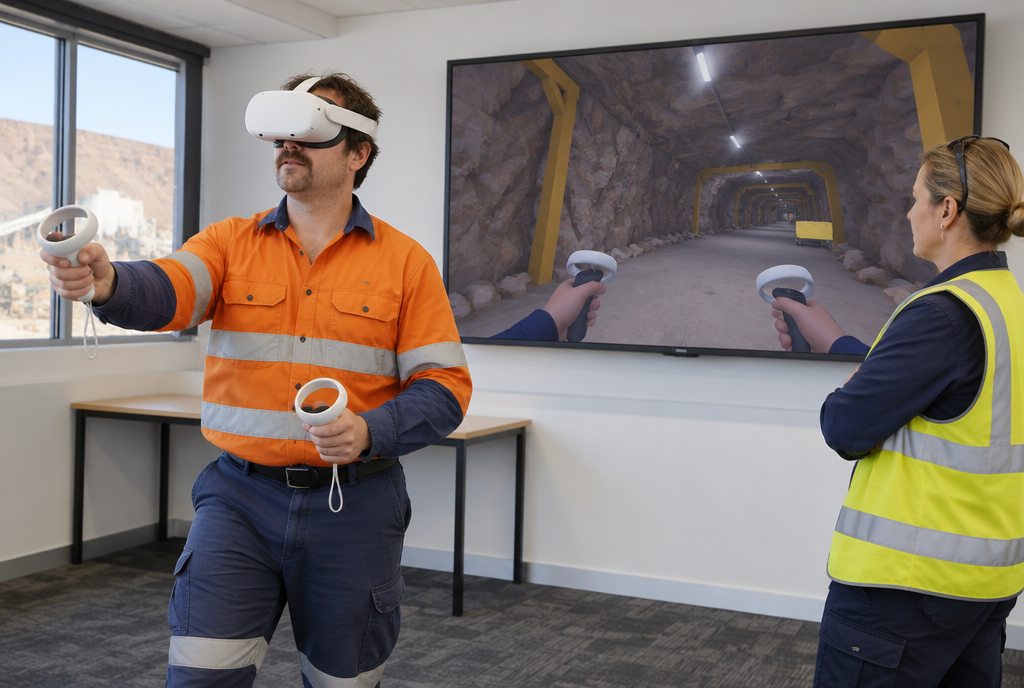
| Single-user VR scenario | $$ | Interaction design, hand tracking, testing on headsets |
| Multi-user VR drill | $$$ | Networking, voice, instructor controls, more testing |
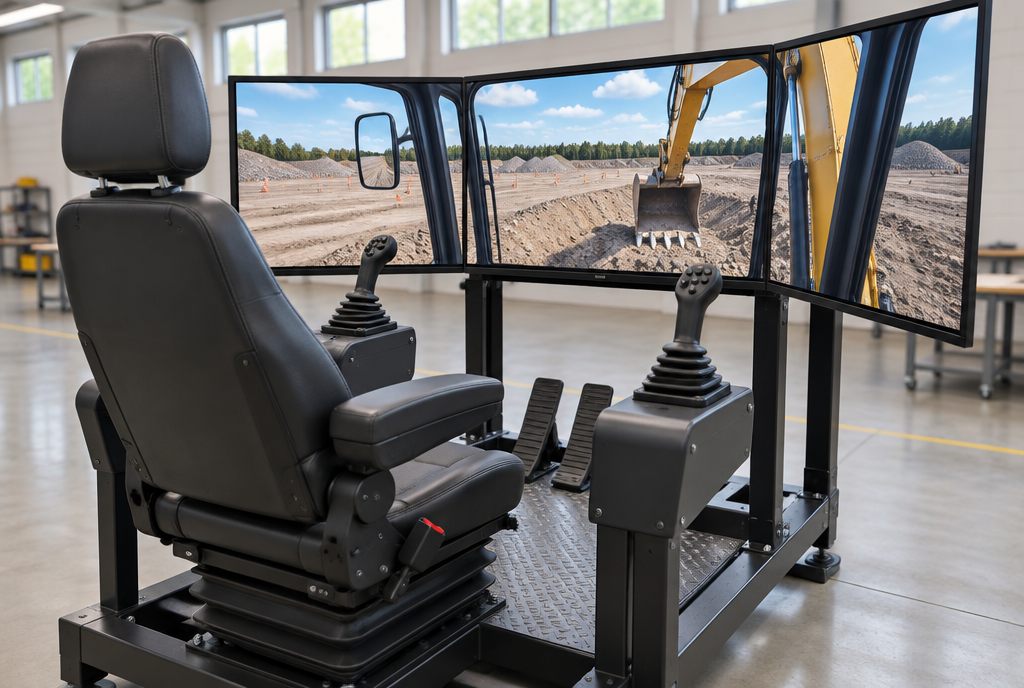
| Desk or seat simulator with physical controls | $$$ | Controls, frame, machine model, calibration |
| Replica cab, static | $$$$ | Cab fabrication, instruments, displays |
| Replica cab on a motion platform | $$$$$ | Motion system, safety systems, power and space |
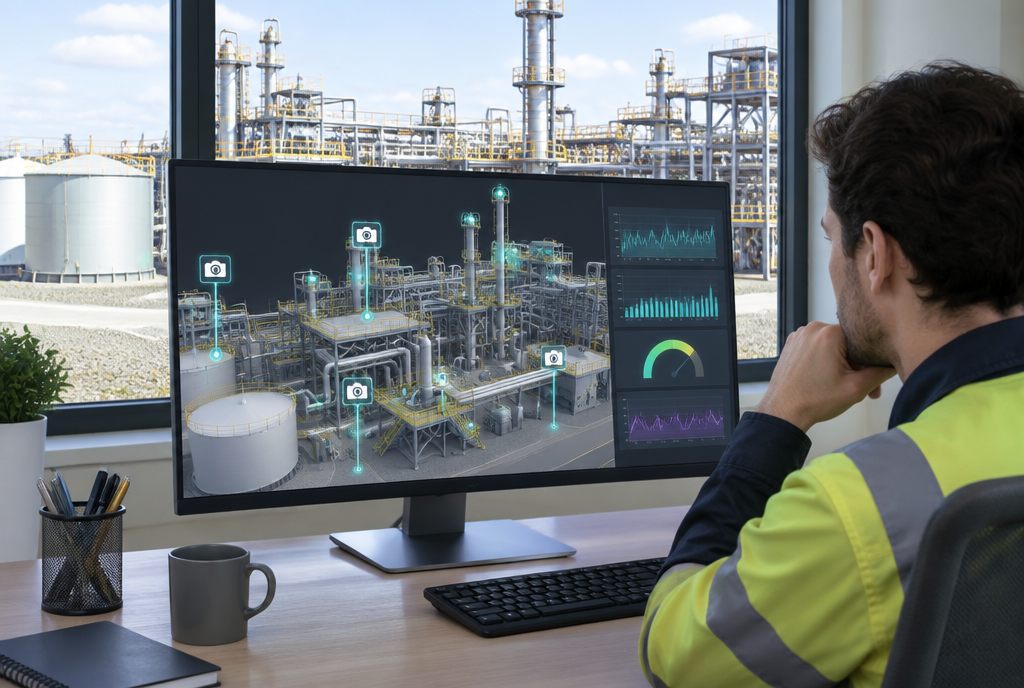
| Digital twin with cameras and IoT | $$ to $$$$$ | Site size, capture method, number of devices, connectivity |
The eight things that set the price
1. How many scenarios
Each scenario needs design, building, testing and sign-off. A focused program of a few high-consequence scenarios usually beats a long catalogue on both cost and results.
2. How realistic the environment must be
A generic warehouse is cheaper than your warehouse. But recognition matters: trainees learn faster on a site they know. The sweet spot is your layout and signage at a sensible level of detail.
3. How the machine must behave
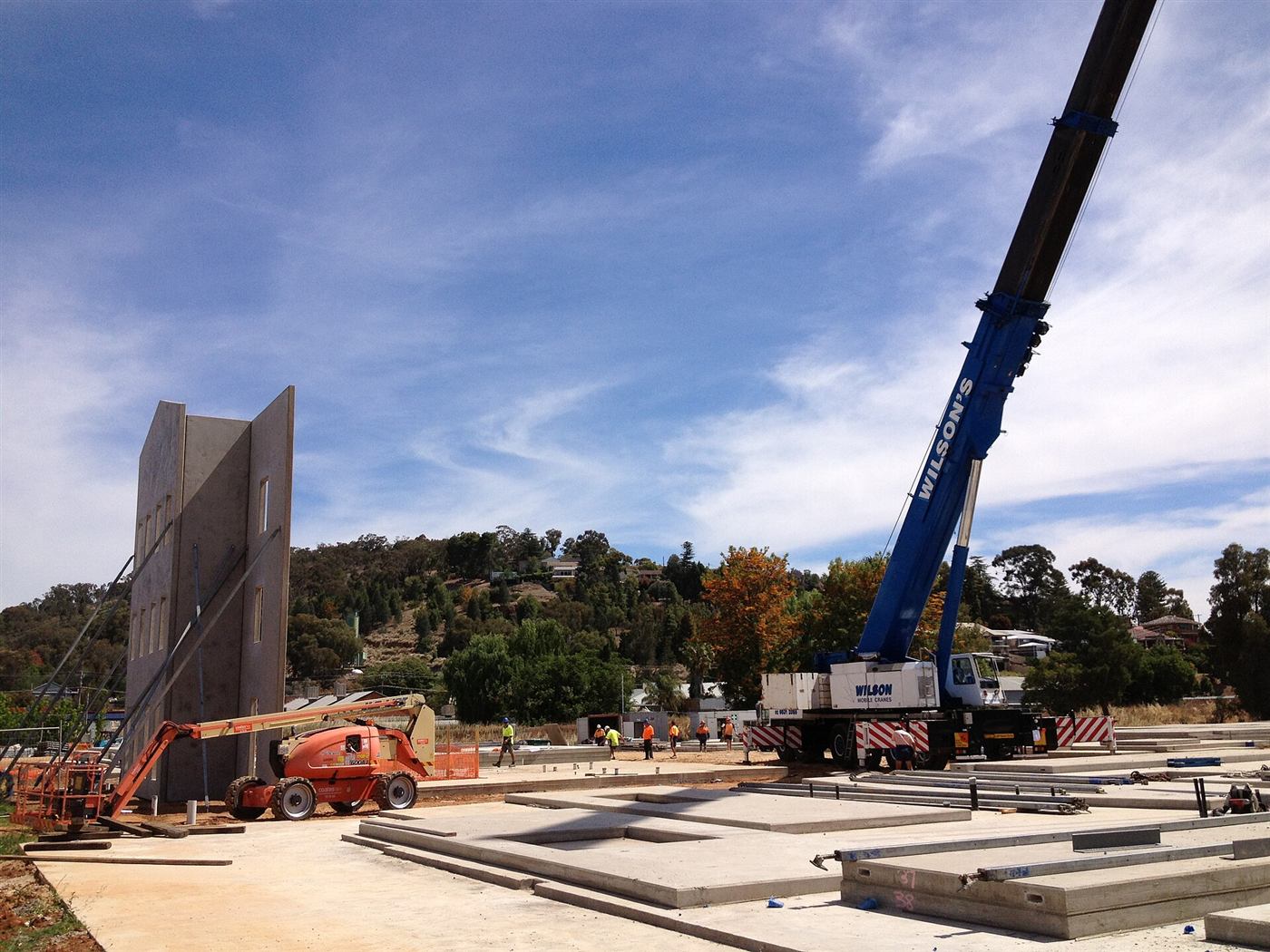
A forklift that drives is one thing. A crane that swings a load realistically according to its load chart is engineering. Physics fidelity is one of the biggest cost drivers in equipment simulators.
4. Hardware
Standalone headsets are the cheapest hardware. Physical controls, cabs and motion platforms add fabrication, electronics and installation. Motion is worth it for some machines and not for others.
5. Single or multi-user
Putting a crew in one scene, such as an operator, a dogman and a supervisor, means networking, voice, synchronisation and a lot more testing.
6. Assessment and records
Scoring against your competencies, instructor dashboards and LMS integration through SCORM or xAPI are often what makes the training defensible. They take design time with your assessors.
7. Languages and accessibility
Voiced instruction, translation and accessibility options add cost per language but can be essential for diverse crews.
8. Support and updates
Procedures change. Sites change. Budget for updates, hardware support and new scenarios from near-miss reports, not just the first build.
Costs people forget
- Instructor time to run and debrief sessions.
- Space, power and storage for simulators and headsets.
- Hardware replacement and charging, cleaning and hygiene for headsets.
- Internal subject-matter expert time to review scenarios.
Weighing it against what you spend now
The honest comparison isn't VR against nothing. It's VR against what training costs you today:
- machines taken out of production for training, plus fuel and wear;
- supervisors and assessors tied up during practice hours;
- travel to training centres for remote crews;
- damage during training on real equipment;
- and the cost of incidents that training was meant to prevent.
Studies such as PwC's 2020 enterprise study found VR reached cost parity with classroom training at a few hundred learners. Your break-even depends on your crew numbers and what real-equipment time costs you. Our article on VR training vs classroom training covers the evidence.
How to compare quotes
- Is the scope the same: number of scenarios, machines, users and languages?
- Is the environment your site, or a generic one?
- Does the price include hardware, installation and instructor training?
- Who owns the content at the end, and what does it cost to update?
- Is there a paid pilot so you can test results before committing?
How to get an accurate number
Start with a training needs analysis. It defines which tasks need simulation and in what form, so the quote is for what you need, not what a vendor wants to sell. At Voxelane we quote custom builds after that analysis, and we usually recommend a small pilot first.